
Have you ever wondered why certain skincare products work better for hydration, while others help reduce dark spots, control acne, or improve skin texture? The answer often lies in their ingredients.
Active ingredients are specific components in skincare formulations designed to target particular skin concerns. From improving hydration and reducing pigmentation to controlling excess oil and supporting healthy skin renewal, these ingredients play an important role in an effective skincare routine.
Some of the most popular skincare ingredients include niacinamide, hyaluronic acid, vitamin C, retinol, and salicylic acid. Understanding how these ingredients work can help you make informed decisions when purchasing skincare products.
In this guide, Healthmedic explains the benefits of popular skincare active ingredients, how to use them, and how to choose the right products for your skin type.
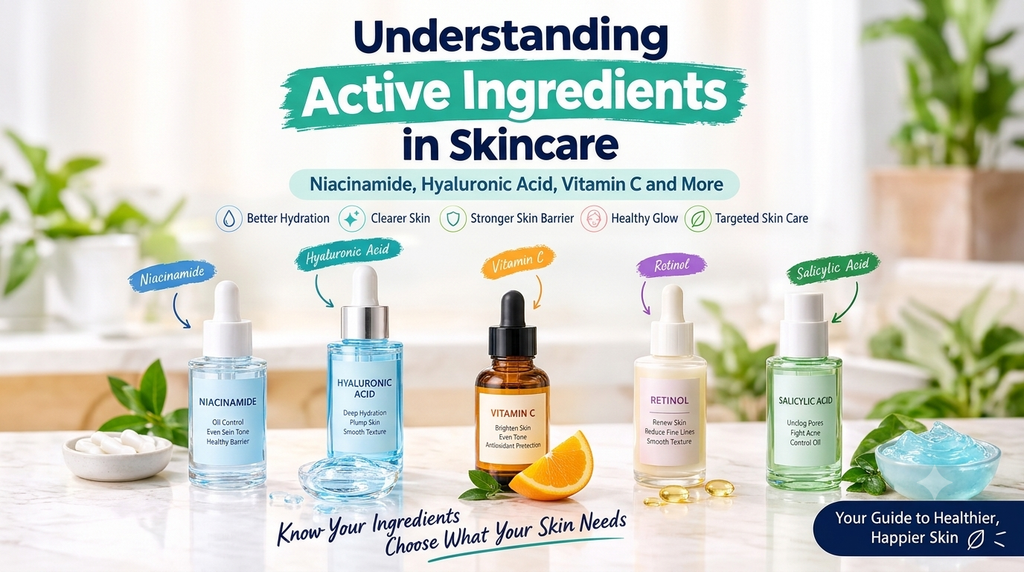
What Are Active Ingredients in Skincare?
Active ingredients are components formulated to provide specific skincare benefits. Unlike basic formulation ingredients that mainly improve texture, consistency, or product stability, active ingredients are included to address concerns such as acne, dryness, pigmentation, fine lines, and uneven skin tone.
Different active ingredients work in different ways. Some attract moisture, some help remove dead skin cells, while others provide antioxidant protection or support skin renewal.
Choosing the right ingredients depends on your skin type, concerns, and tolerance. Using too many powerful ingredients together may cause irritation, dryness, or sensitivity.
1. Niacinamide: For Oil Control and Skin Barrier Support
Niacinamide, also known as Vitamin B3, is one of the most versatile ingredients in modern skincare. It is suitable for many skin types and is commonly found in serums, moisturizers, and creams.
Key Benefits of Niacinamide:
- Helps regulate excess sebum production.
- Supports the skin’s natural protective barrier.
- Helps improve the appearance of uneven skin tone.
- Reduces the appearance of enlarged pores.
- Helps calm visible redness and irritation.
- Improves the appearance of dull and uneven skin.
Who Should Use It?
Niacinamide can be beneficial for people with oily, combination, acne-prone, and uneven-toned skin. It is generally well tolerated, including by many people with sensitive skin.
How to Use: Apply a niacinamide serum after cleansing and before moisturizer. It can generally be used in both morning and evening routines.
2. Hyaluronic Acid: For Deep Hydration and Plump-Looking Skin
Hyaluronic acid is a naturally occurring substance in the body that helps retain moisture. In skincare, it acts as a humectant, attracting water to help keep the skin hydrated.
It is especially popular among people experiencing dryness, dehydration, or tightness.
Key Benefits of Hyaluronic Acid:
- Helps attract and retain moisture.
- Improves skin hydration.
- Makes skin appear smoother and plumper.
- Helps reduce the appearance of dehydration-related fine lines.
- Supports a comfortable, hydrated skin feel.
- Suitable for most skin types.
Who Should Use It?
People with dry, dehydrated, normal, oily, or sensitive skin can benefit from hyaluronic acid. Even oily skin can experience dehydration and benefit from lightweight hydration.
How to Use: Apply a hyaluronic acid serum to slightly damp skin, followed by a moisturizer to help reduce moisture loss.
3. Vitamin C: For Brightening and Antioxidant Protection
Vitamin C is a powerful antioxidant widely used in skincare products designed to improve dullness and uneven skin tone. It helps protect the skin against oxidative stress caused by environmental factors, including UV exposure and pollution.
It is particularly popular in morning skincare routines.
Key Benefits of Vitamin C:
- Helps brighten dull-looking skin.
- Supports a more even-looking skin tone.
- Helps reduce the appearance of dark spots and pigmentation.
- Provides antioxidant protection against free radicals.
- Supports natural collagen production.
- Helps improve the appearance of uneven skin texture.
Who Should Use It?
Vitamin C may be helpful for individuals concerned about dullness, pigmentation, dark spots, and uneven skin tone.
How to Use: Apply a suitable vitamin C serum after cleansing in the morning. Follow it with moisturizer and broad-spectrum sunscreen. Beginners and people with sensitive skin should start with a lower concentration or a gentler formulation.
4. Retinol: For Fine Lines and Skin Renewal
Retinol is a Vitamin A derivative commonly used in anti-ageing and acne-focused skincare products. It supports skin cell turnover and helps improve the appearance of skin texture over time.
Retinol is considered a more advanced skincare active and should be introduced gradually.
Key Benefits of Retinol:
- Helps reduce the appearance of fine lines and wrinkles.
- Improves uneven skin texture.
- Helps unclog pores.
- Supports skin renewal.
- Helps improve the appearance of acne marks and uneven pigmentation.
- Promotes smoother-looking skin.
Who Should Use It?
Retinol may benefit people concerned about early signs of ageing, uneven texture, and certain types of acne.
How to Use: Start with a low-strength retinol product two nights per week and gradually increase frequency as tolerated. Apply at night, followed by moisturizer. Daily sunscreen is essential.
Retinoids should generally be avoided during pregnancy. Consult a healthcare professional before using them if pregnant or planning pregnancy.
5. Salicylic Acid: For Acne and Clogged Pores
Salicylic acid is a beta-hydroxy acid (BHA) commonly used in products formulated for oily and acne-prone skin. It is oil-soluble, which allows it to penetrate into pores and help remove accumulated dead skin cells and excess oil.
Key Benefits of Salicylic Acid:
- Helps unclog blocked pores.
- Reduces blackheads and whiteheads.
- Helps manage acne breakouts.
- Removes accumulated dead skin cells.
- Helps reduce excess oil and congestion.
- Improves the appearance of rough skin texture.
Who Should Use It?
Salicylic acid is particularly useful for people with oily, combination, and acne-prone skin.
How to Use: Start with a low-concentration cleanser or leave-on product a few times per week. Increase usage gradually depending on skin tolerance. Avoid combining multiple exfoliating products initially.
6. Glycolic Acid: For Exfoliation and Smoother Skin
Glycolic acid is an alpha-hydroxy acid (AHA) that helps exfoliate the outer layer of the skin by loosening the bonds between dead skin cells.
It is commonly used in exfoliating toners, serums, and chemical peel formulations.
Key Benefits of Glycolic Acid:
- Helps remove dead skin cells.
- Improves the appearance of uneven skin texture.
- Helps brighten dull-looking skin.
- Reduces the appearance of certain dark spots.
- Promotes smoother-looking skin.
Who Should Use It?
It may be suitable for people experiencing dullness, rough texture, and uneven skin tone. Sensitive skin types should use it cautiously.
How to Use: Introduce glycolic acid gradually, preferably in an evening routine. Avoid using it alongside several other exfoliating actives until your skin develops tolerance. Use sunscreen during the day.
7. Ceramides: For Skin Barrier Protection
Ceramides are naturally occurring lipids that help maintain the skin’s protective barrier. They play an important role in preventing excessive moisture loss and protecting the skin from external irritants.
Key Benefits of Ceramides:
- Support the skin’s natural barrier.
- Help prevent moisture loss.
- Improve skin hydration.
- Help relieve dryness and tightness.
- Support sensitive and compromised skin.
Who Should Use Them?
Ceramides are beneficial for dry, sensitive, dehydrated, and barrier-damaged skin. They are commonly found in moisturizers, lotions, and barrier-repair creams.
How to Use: Apply a ceramide-based moisturizer after cleansing or after your treatment serums. It can be used in both morning and evening routines.
How to Choose the Right Active Ingredients for Your Skin Type
Not every skincare ingredient is suitable for every skin concern. Choosing products based on your skin type can help you build a more effective and comfortable routine.
| Skin Type or Concern | Ingredients to Consider |
|---|---|
| Oily skin | Niacinamide, Salicylic Acid |
| Dry skin | Hyaluronic Acid, Ceramides |
| Acne-prone skin | Salicylic Acid, Niacinamide |
| Dull skin | Vitamin C, Glycolic Acid |
| Pigmentation | Vitamin C, Retinol, Niacinamide |
| Fine lines | Retinol, Vitamin C |
| Sensitive skin | Ceramides, Hyaluronic Acid |
Remember that these are general suggestions. Your skin’s tolerance and individual needs should always guide product selection.
Can You Use Multiple Active Ingredients Together?
Yes, certain skincare ingredients can be combined in the same routine. However, it is important to introduce new products gradually and avoid overloading your skin.
Some commonly used combinations include:
- Niacinamide + Hyaluronic Acid: Helps support hydration and skin barrier function.
- Vitamin C + Hyaluronic Acid: Provides antioxidant support alongside hydration.
- Niacinamide + Salicylic Acid: Can help address excess oil and clogged pores.
- Retinol + Ceramides: Combines skin-renewal benefits with barrier-supporting hydration.
If you are new to active ingredients, start with one active product at a time. Avoid introducing retinol, glycolic acid, and salicylic acid together without appropriate guidance.
Final Thoughts
Understanding active ingredients is an important step towards choosing the right skincare products. Whether your goal is better hydration, improved skin texture, acne management, or a brighter-looking complexion, ingredients such as niacinamide, hyaluronic acid, vitamin C, retinol, and salicylic acid can play a valuable role in your routine.
The key is to choose products according to your skin type, introduce active ingredients gradually, and maintain daily sun protection.
At Healthmedic, we believe that informed skincare choices lead to better skincare habits. Explore skincare essentials, serums, moisturizers, sunscreens, and haircare products to find options that complement your daily routine.