
Knowing your skin type is the foundation of an effective skincare routine. Many people invest in expensive products but fail to see results simply because they are not using products suited to their skin type. Whether your skin is oily, dry, combination, or sensitive, understanding its unique needs can help you choose the right products and maintain healthy, glowing skin.
Why Identifying Your Skin Type Matters
Your skin type determines how your skin reacts to environmental factors, products, and lifestyle habits. Using the wrong products can lead to breakouts, irritation, dryness, or excess oil production. Once you understand your skin type, you can build a skincare routine that works with your skin rather than against it.
1. Oily Skin
Characteristics:
- Excess shine, especially on the T-zone (forehead, nose, chin)
- Enlarged pores
- Frequent acne and blackheads
- Makeup may not stay long
Oily skin occurs when the sebaceous glands produce too much sebum (natural oil). While it can lead to acne, it also has a benefit—oily skin tends to age slower due to better natural hydration.
How to Care for Oily Skin:
- Use a gentle foaming or gel-based cleanser
- Avoid harsh products that strip natural oils
- Choose oil-free and non-comedogenic moisturizers
- Use lightweight sunscreens (gel-based or matte finish)
- Incorporate ingredients like salicylic acid or niacinamide
2. Dry Skin
Characteristics:
- Rough, flaky texture
- Tight feeling, especially after washing
- Dull appearance
- Visible fine lines
Dry skin lacks sufficient moisture and natural oils. It can feel uncomfortable and may worsen in cold weather or with excessive use of harsh skincare products.
How to Care for Dry Skin:
- Use a hydrating, cream-based cleanser
- Apply a rich moisturizer with ingredients like hyaluronic acid or ceramides
- Avoid long hot showers, as they strip moisture
- Use gentle exfoliation once a week
- Always apply sunscreen to prevent further damage
3. Combination Skin
Characteristics:
- Oily T-zone and dry or normal cheeks
- Occasional breakouts in specific areas
- Uneven skin texture
Combination skin is one of the most common skin types, especially among Indian skin tones. It requires a balanced approach, as different areas of the face have different needs.
How to Care for Combination Skin:
- Use a mild cleanser suitable for all skin types
- Apply lightweight moisturizer on oily areas and richer cream on dry areas if needed
- Use targeted treatments (e.g., clay masks for oily zones)
- Avoid heavy, greasy products
- Choose balanced skincare formulations
4. Sensitive Skin
Characteristics:
- Redness, itching, or burning sensation
- Easily irritated by products or weather
- Prone to rashes or allergic reactions
Sensitive skin reacts quickly to external factors such as pollution, harsh chemicals, or even certain natural ingredients. It requires extra care and gentle products.
How to Care for Sensitive Skin:
- Use fragrance-free and hypoallergenic products
- Avoid products with alcohol or strong active ingredients
- Do a patch test before trying new products
- Stick to a simple skincare routine
- Look for soothing ingredients like aloe vera or chamomile
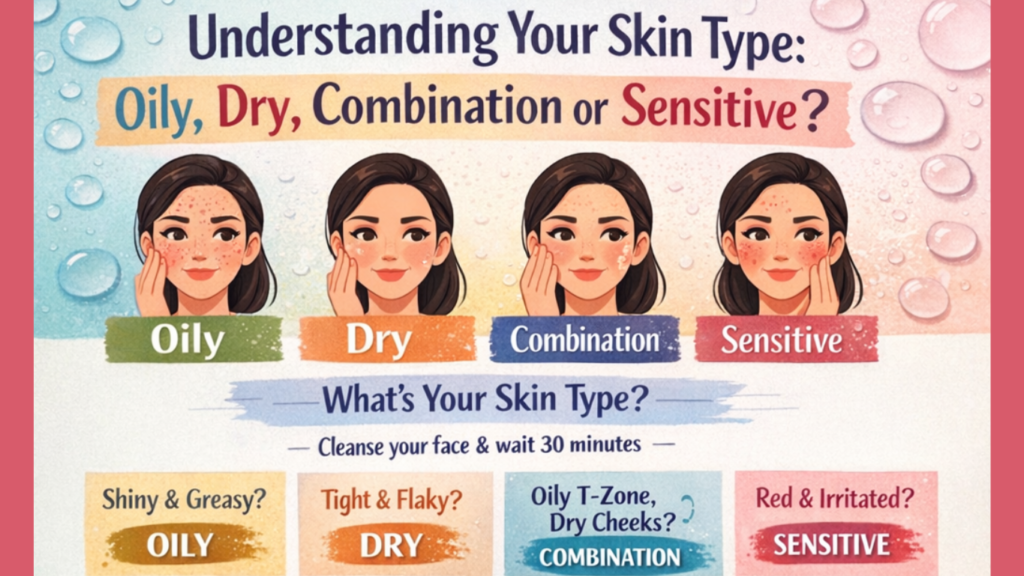
How to Determine Your Skin Type at Home
You don’t always need a dermatologist to identify your skin type. Try this simple method:
- Wash your face with a gentle cleanser
- Pat dry and leave it bare (no products) for 30 minutes
- Observe how your skin feels:
- Oily all over? → Oily skin
- Tight and flaky? → Dry skin
- Oily in T-zone, dry elsewhere? → Combination skin
- Red, itchy, or irritated? → Sensitive skin
Common Mistakes to Avoid
- Over-cleansing: Washing your face too often can damage the skin barrier
- Skipping moisturizer: Even oily skin needs hydration
- Using too many products: This can irritate your skin, especially if it’s sensitive
- Ignoring sunscreen: Sun damage affects all skin types
Final Thoughts
Understanding your skin type is the first step toward achieving healthy and radiant skin. Instead of blindly following trends, focus on what your skin truly needs. A well-informed skincare routine not only improves your skin’s appearance but also prevents long-term issues.
Remember, your skin type may change over time due to age, climate, hormones, or lifestyle. So, it’s important to reassess your skin periodically and adjust your routine accordingly.