
Skin pigmentation is a natural process that determines the color of our skin, hair, and eyes. While many people experience changes in skin color such as dark spots, tanning, or uneven skin tone, few truly understand the science behind why it happens. In this article, we will explain how skin pigmentation happens in simple terms, the factors that affect it, and how to manage pigmentation problems effectively.
Whether you are dealing with hyperpigmentation, melasma, sun spots, or uneven skin tone, understanding the science behind pigmentation can help you make better skincare decisions.
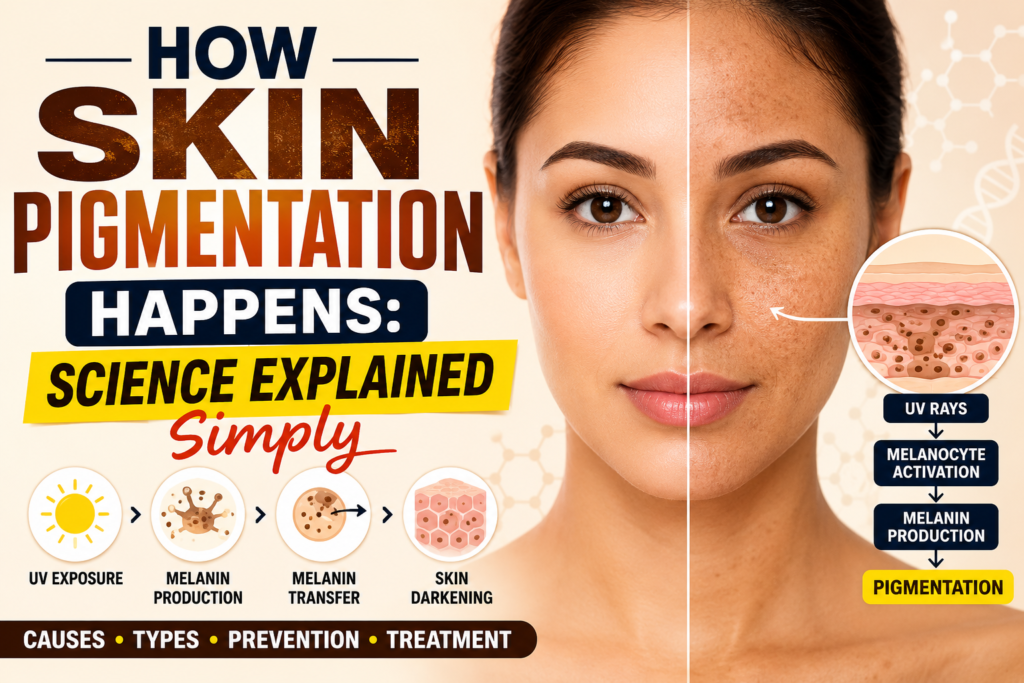
What Is Skin Pigmentation?
Skin pigmentation refers to the coloring of the skin caused by a natural pigment called melanin. Melanin is produced by specialized skin cells known as melanocytes, which are found in the outer layer of the skin (epidermis).
The amount and type of melanin your body produces determine your natural skin color. People with darker skin tones produce more melanin, while lighter skin tones produce less.
There are two main types of melanin:
- Eumelanin – responsible for brown and black skin tones.
- Pheomelanin – responsible for red and yellow tones.
The balance between these two types affects your unique skin tone.
How Does Skin Pigmentation Happen?
UV Exposure→Melanocyte Activation→Melanin Production→Skin Darkening\text{UV Exposure} \rightarrow \text{Melanocyte Activation} \rightarrow \text{Melanin Production} \rightarrow \text{Skin Darkening}UV Exposure→Melanocyte Activation→Melanin Production→Skin Darkening
The process of skin pigmentation involves several biological steps:
1. Melanocytes Get Activated
Melanocytes are cells located in the skin’s basal layer. When triggered by factors like sun exposure, hormonal changes, or inflammation, these cells become active.
2. Melanin Production Begins
Once activated, melanocytes start producing melanin through a process called melanogenesis. An enzyme called tyrosinase plays a major role in this process.
Tyrosinase converts an amino acid called tyrosine into melanin.
3. Melanin Moves to Skin Cells
The produced melanin is transferred to nearby skin cells called keratinocytes. These cells carry the pigment to the skin’s surface, making the skin appear darker.
4. Skin Color Changes
As melanin accumulates, it causes visible pigmentation such as:
- Tanning
- Dark spots
- Patchy skin
- Uneven skin tone
Why Does Skin Produce More Melanin?
Your body increases melanin production mainly as a protective response.
Sun Exposure (UV Rays)
The most common cause of pigmentation is UV radiation from the sun. When your skin is exposed to sunlight, it produces extra melanin to protect deeper skin layers from UV damage. This is why tanning happens.
Common conditions:
- Sun tanning
- Sunspots
- Freckles
Hormonal Changes
Hormonal fluctuations can stimulate melanocytes and cause excess pigmentation.
Examples:
- Pregnancy (often causing melasma)
- Birth control pills
- Thyroid issues
Melasma often appears as brown patches on the face, especially on the cheeks and forehead.
Inflammation or Skin Injury
When the skin gets injured due to acne, burns, cuts, or irritation, it may leave dark marks behind. This is called Post-Inflammatory Hyperpigmentation (PIH).
Common triggers:
- Acne scars
- Skin rashes
- Aggressive facials
- Picking pimples
Genetics
Some people are genetically more likely to develop pigmentation issues like freckles, melasma, or darker patches.
If your family has a history of pigmentation problems, you may be more prone to them.
Types of Skin Pigmentation Problems
Hyperpigmentation
This occurs when excess melanin causes dark patches or spots.
Examples:
- Age spots
- Acne marks
- Melasma
Hypopigmentation
This happens when the skin loses pigment and becomes lighter.
Examples:
- Vitiligo
- Post-burn white patches
Depigmentation
Complete loss of melanin in certain skin areas, often due to autoimmune conditions or skin trauma.
Common Causes of Skin Pigmentation
Some common triggers include:
- Excessive sun exposure
- Hormonal imbalance
- Acne and skin inflammation
- Certain medications
- Aging
- Stress
- Poor skincare habits
- Pollution
- Vitamin deficiencies
How to Prevent Skin Pigmentation
Preventing pigmentation is easier than treating it. Follow these tips:
Use Sunscreen Daily
A broad-spectrum sunscreen with SPF 30 or higher helps prevent UV-induced pigmentation.
Look for:
- Broad-spectrum sunscreen
- PA+++ or higher
- Reapply every 2–3 hours
Avoid Picking Your Skin
Picking acne or scratching skin can worsen pigmentation and leave long-lasting marks.
Follow a Gentle Skincare Routine
Use products with proven ingredients such as:
- Vitamin C – brightens skin
- Niacinamide – reduces dark spots
- Retinol – boosts cell turnover
- Azelaic Acid – helps with acne marks
- Kojic Acid – controls melanin production
Treatments for Skin Pigmentation
If pigmentation becomes stubborn, professional treatments may help.
Chemical Peels
Chemical Peel removes the top pigmented skin layer and promotes fresh skin growth.
Benefits:
- Improves skin tone
- Reduces acne marks
- Brightens dull skin
Laser Treatment
Laser Toning targets melanin deposits deep in the skin and helps break them down.
Ideal for:
- Melasma
- Sunspots
- Deep pigmentation
Microneedling
Microneedling stimulates skin repair and can improve pigmentation over time.
Prescription Creams
Dermatologists may recommend:
- Hydroquinone
- Retinoids
- Steroid combinations
Always use these under medical supervision.
Myths About Skin Pigmentation
Myth 1: Only sunlight causes pigmentation.
Fact: Hormones, inflammation, and genetics also play major roles.
Myth 2: Pigmentation disappears on its own.
Fact: Some pigmentation fades, but many types need treatment.
Myth 3: Fair skin doesn’t get pigmentation.
Fact: All skin tones can develop pigmentation issues.
Final Thoughts
Skin pigmentation is a natural biological process designed to protect your skin, but when melanin production becomes uneven or excessive, it can lead to unwanted dark spots and uneven tone.
By understanding how skin pigmentation happens, you can take smarter steps to prevent and treat it. Daily sunscreen, proper skincare, and timely dermatologist consultation can make a huge difference.
If you are struggling with stubborn pigmentation, consulting a qualified dermatologist is the best way to get personalized treatment.