
Many people believe that dry skin and dehydrated skin are the same thing. However, they are completely different skin conditions that require different types of care. Understanding the Difference Between Dry Skin and Dehydrated Skin can help you choose the right skincare products and maintain healthier skin.
If you often experience tightness, rough patches, or dull-looking skin, it is important to identify whether your skin is dry or dehydrated. Using the wrong products may make the condition worse instead of improving it.
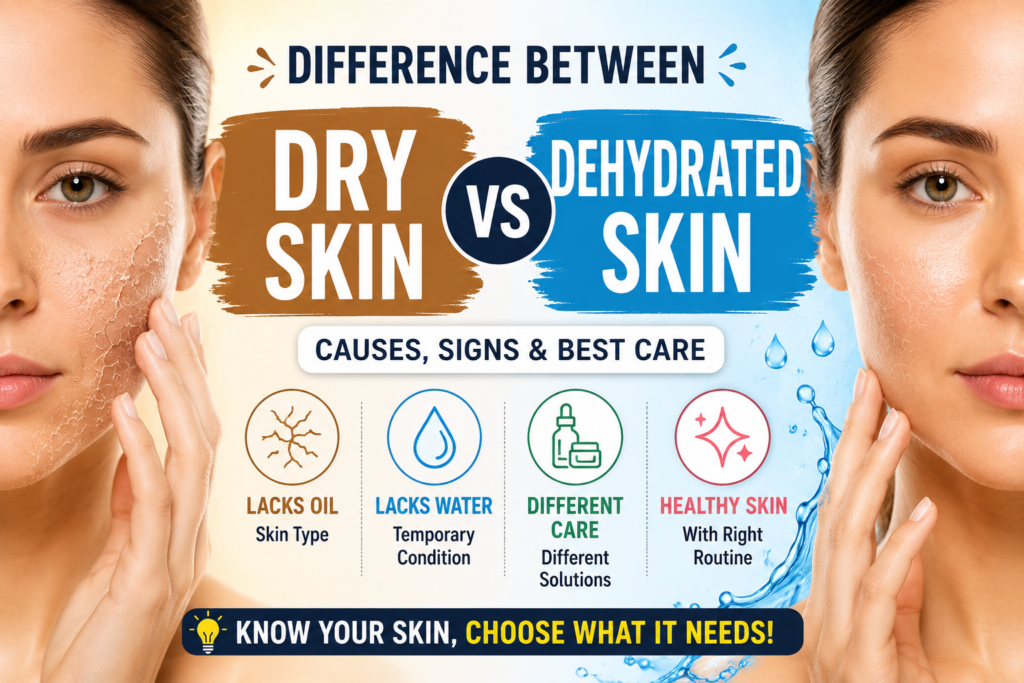
What is Dry Skin?
Dry skin is a skin type. It occurs when the skin produces less natural oil (sebum) than normal. These natural oils help protect the skin barrier and keep the skin soft and smooth.
People with dry skin often experience:
- Rough or flaky skin
- Itching and irritation
- Redness
- Tight feeling after washing the face
- Cracked skin in severe cases
Dry skin can be caused by genetics, aging, cold weather, harsh soaps, or certain medical conditions. Since it is a skin type, people with dry skin usually experience these symptoms consistently throughout the year.
How to Care for Dry Skin
Proper dry skin care focuses on restoring and protecting the skin barrier. Some useful tips include:
- Use a gentle cleanser
- Apply a rich moisturizer daily
- Avoid very hot water while bathing
- Use products containing ceramides, glycerin, and hyaluronic acid
- Protect the skin from harsh weather conditions
Consistent moisturizing is essential because dry skin lacks oil and needs extra nourishment.
What is Dehydrated Skin?
Dehydrated skin is not a skin type. It is a temporary skin condition that occurs when the skin lacks water. Even people with oily or combination skin can experience dehydration.
Common dehydrated skin symptoms include:
- Dull and tired-looking skin
- Increased sensitivity
- Fine lines appearing more visible
- Tightness despite oily skin
- Lack of glow
- Skin feeling uncomfortable
Dehydration can occur due to insufficient water intake, excessive sun exposure, air conditioning, stress, lack of sleep, or overuse of strong skincare products.
Unlike dry skin, dehydrated skin can often improve when the body and skin receive enough hydration.
Difference Between Dry Skin and Dehydrated Skin
Understanding the Difference Between Dry Skin and Dehydrated Skin is important because each condition requires a different treatment approach.
| Dry Skin | Dehydrated Skin |
|---|---|
| Lacks oil | Lacks water |
| A skin type | A temporary skin condition |
| Often genetic | Usually caused by lifestyle or environment |
| Rough and flaky texture | Dull and tight appearance |
| Needs nourishing oils and moisturizers | Needs hydration and water-retaining ingredients |
| Usually long-term | Can improve quickly with proper care |
A simple way to remember this is that dry skin needs oil, while dehydrated skin needs water.
How to Identify Your Skin Condition
One common method is the pinch test. Gently pinch the skin on your cheek. If the skin appears wrinkled or takes time to bounce back, it may indicate dehydration.
You can also observe how your skin behaves throughout the day:
- If your skin feels rough and flaky all the time, it is likely dry skin.
- If your skin feels oily but still tight and uncomfortable, dehydration may be the issue.
Many people can have both conditions at the same time. In such cases, the skin lacks both oil and water.
Best Ingredients for Dry Skin
When dealing with dry skin, look for ingredients that help replenish lost oils and strengthen the skin barrier.
Helpful ingredients include:
- Ceramides
- Shea butter
- Squalane
- Natural oils
- Glycerin
These ingredients support healthy skin by reducing moisture loss and improving skin softness.
Best Ingredients for Dehydrated Skin
For dehydrated skin, focus on ingredients that attract and retain water.
Some excellent options include:
- Hyaluronic acid
- Glycerin
- Aloe vera
- Panthenol
- Sodium PCA
These ingredients improve skin hydration and help the skin look plump, smooth, and refreshed.
Lifestyle Tips to Improve Skin Hydration
Skincare products are important, but lifestyle habits also play a major role in maintaining proper skin hydration.
Follow these simple tips:
- Drink enough water throughout the day.
- Eat fruits and vegetables rich in water content.
- Limit excessive caffeine and alcohol consumption.
- Get enough sleep every night.
- Use a humidifier in dry environments.
- Avoid over-cleansing your face.
Small daily changes can significantly improve the appearance and comfort of your skin.
Common Mistakes People Make
Many people mistake dehydrated skin for dry skin and start using heavy oils. While oils may help dry skin, they may not fully solve dehydration if the skin lacks water.
Similarly, some people focus only on drinking water without using proper moisturizers. Healthy skin requires both internal hydration and external skincare support.
Understanding the exact condition helps you choose products more effectively and avoid unnecessary irritation.
Conclusion
The Difference Between Dry Skin and Dehydrated Skin is simple but important. Dry skin lacks natural oils, while dehydrated skin lacks water. Dry skin is a permanent skin type, whereas dehydration is usually a temporary condition caused by lifestyle or environmental factors.
By recognizing the signs early and choosing the right skincare routine, you can improve your skin’s appearance, comfort, and overall health. Whether you need better dry skin care or solutions for dehydrated skin symptoms, understanding your skin’s needs is the first step toward achieving healthy skin and long-lasting skin hydration.