
The skincare industry is filled with products promising brighter, smoother, and healthier skin. However, the real magic behind effective skincare lies in the active ingredients. Whether you are dealing with acne, pigmentation, fine lines, or dullness, understanding active ingredients can help you choose products that truly address your skin concerns.
In this guide, we will explore what active ingredients are, how they work, and the benefits of some of the most popular skincare ingredients: Niacinamide, Retinol, AHA, and BHA.
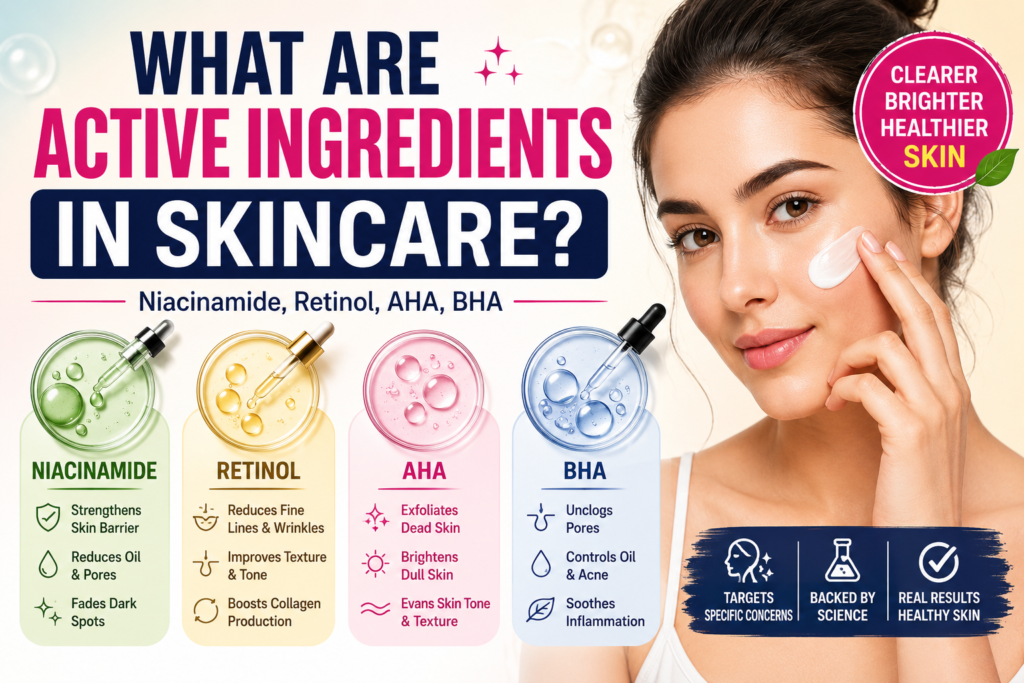
What Are Active Ingredients in Skincare?
Active ingredients are components in skincare products that are scientifically proven to target specific skin concerns. Unlike inactive ingredients that mainly support texture, stability, or preservation, active ingredients perform the primary function of the product.
For example:
- Retinol helps reduce wrinkles and improve skin texture.
- Niacinamide helps strengthen the skin barrier and reduce redness.
- AHAs exfoliate the skin surface.
- BHAs penetrate pores and help control acne.
Understanding these ingredients can help you build a more effective skincare routine tailored to your skin type and concerns.
Niacinamide: The Multi-Tasking Skin Savior
Niacinamide, also known as Vitamin B3, is one of the most versatile skincare ingredients available today. It is suitable for almost all skin types, including sensitive and acne-prone skin.
Benefits of Niacinamide
1. Reduces Excess Oil Production
Niacinamide helps regulate sebum production, making it beneficial for people with oily and acne-prone skin.
2. Minimizes Pores
While pores cannot physically shrink, niacinamide can improve their appearance by reducing oil buildup and enhancing skin elasticity.
3. Improves Skin Barrier Function
A healthy skin barrier helps protect against environmental damage and moisture loss. Niacinamide strengthens this barrier and improves hydration.
4. Fades Dark Spots
Regular use can help reduce post-inflammatory hyperpigmentation, acne marks, and uneven skin tone.
5. Calms Redness and Irritation
Its anti-inflammatory properties make it ideal for sensitive skin and conditions such as rosacea.
Best For: Oily skin, acne-prone skin, enlarged pores, pigmentation, and sensitive skin.
Retinol: The Gold Standard for Anti-Aging
Retinol is a derivative of Vitamin A and is widely considered one of the most effective anti-aging ingredients available.
Retinol works by increasing cell turnover and stimulating collagen production, helping the skin appear younger and healthier over time.
Benefits of Retinol
1. Reduces Fine Lines and Wrinkles
Retinol boosts collagen synthesis, helping smooth wrinkles and improve skin firmness.
2. Improves Skin Texture
Regular use can make rough skin feel smoother and more refined.
3. Fights Acne
Retinol helps prevent clogged pores, reducing blackheads, whiteheads, and acne breakouts.
4. Brightens Skin Tone
It encourages the shedding of old skin cells, revealing fresher and brighter skin underneath.
5. Reduces Hyperpigmentation
Retinol can gradually fade sunspots, age spots, and acne scars.
How to Use Retinol Safely
- Start with a low concentration.
- Use only at night.
- Apply sunscreen daily.
- Introduce it gradually to avoid irritation.
Best For: Aging skin, acne, uneven skin texture, pigmentation, and sun damage.
AHA (Alpha Hydroxy Acid): Surface Exfoliation for Radiant Skin
AHAs are water-soluble acids derived from fruits, milk, and sugar. Common AHAs include Glycolic Acid, Lactic Acid, and Mandelic Acid.
These acids primarily work on the skin’s surface, removing dead skin cells and promoting cell renewal.
Benefits of AHAs
1. Enhances Skin Brightness
By removing dull, dead skin cells, AHAs reveal a fresher and more radiant complexion.
2. Improves Skin Texture
AHAs can smooth rough patches and improve overall skin softness.
3. Reduces Fine Lines
Regular exfoliation stimulates skin renewal and helps minimize early signs of aging.
4. Fades Pigmentation
AHAs can improve the appearance of sun damage, melasma, and post-acne marks.
5. Supports Better Product Absorption
Exfoliated skin allows serums and moisturizers to penetrate more effectively.
Common AHAs
- Glycolic Acid
- Lactic Acid
- Mandelic Acid
- Citric Acid
Best For: Dry skin, dull skin, uneven skin tone, and pigmentation.
BHA (Beta Hydroxy Acid): Deep Pore Cleansing for Acne-Prone Skin
The most popular BHA is Salicylic Acid. Unlike AHAs, BHAs are oil-soluble, allowing them to penetrate deep into pores.
This makes BHAs particularly effective for oily and acne-prone skin.
Benefits of BHA
1. Unclogs Pores
Salicylic Acid dissolves excess oil and debris trapped inside pores.
2. Reduces Blackheads and Whiteheads
Regular use helps prevent pore congestion and future breakouts.
3. Controls Excess Oil
BHA is highly effective for individuals with oily skin.
4. Reduces Acne Inflammation
Its anti-inflammatory properties help calm active acne lesions.
5. Improves Overall Skin Clarity
Consistent use can result in clearer, smoother, and healthier-looking skin.
Best For: Oily skin, acne-prone skin, blackheads, and enlarged pores.
Can You Use These Ingredients Together?
Many active ingredients can work well together when used correctly.
Effective Combinations
- Niacinamide + Retinol: Supports skin barrier while reducing irritation from retinol.
- Niacinamide + BHA: Helps control oil and reduce acne.
- Niacinamide + AHA: Improves skin tone and texture.
- Retinol + AHA/BHA: Can be effective but should be used cautiously to avoid irritation.
If you are new to active ingredients, introduce one product at a time and monitor your skin’s response.
Tips for Using Active Ingredients Safely
- Always perform a patch test before using a new product.
- Introduce active ingredients gradually.
- Avoid over-exfoliating the skin.
- Use a gentle moisturizer to maintain skin barrier health.
- Wear broad-spectrum sunscreen every day, especially when using Retinol, AHA, or BHA.
Final Thoughts
Active ingredients are the foundation of effective skincare. Niacinamide, Retinol, AHA, and BHA each offer unique benefits that can help address concerns such as acne, pigmentation, dullness, enlarged pores, and signs of aging.
Choosing the right active ingredient depends on your skin type and goals. Niacinamide is ideal for overall skin health, Retinol remains the gold standard for anti-aging, AHAs provide excellent surface exfoliation, and BHAs are highly effective for oily and acne-prone skin.
By understanding how these ingredients work, you can build a smarter skincare routine that delivers visible, long-term results while maintaining healthy, balanced skin.