
Skin pigmentation is a natural process that determines the color of your skin, hair, and eyes. While many people notice changes in their skin tone due to sun exposure, aging, or certain skin conditions, very few understand the science behind how skin pigmentation happens. In this article, we’ll explain the science of skin pigmentation in simple words, helping you understand what causes hyperpigmentation, uneven skin tone, and other common pigmentation issues.
What is Skin Pigmentation?
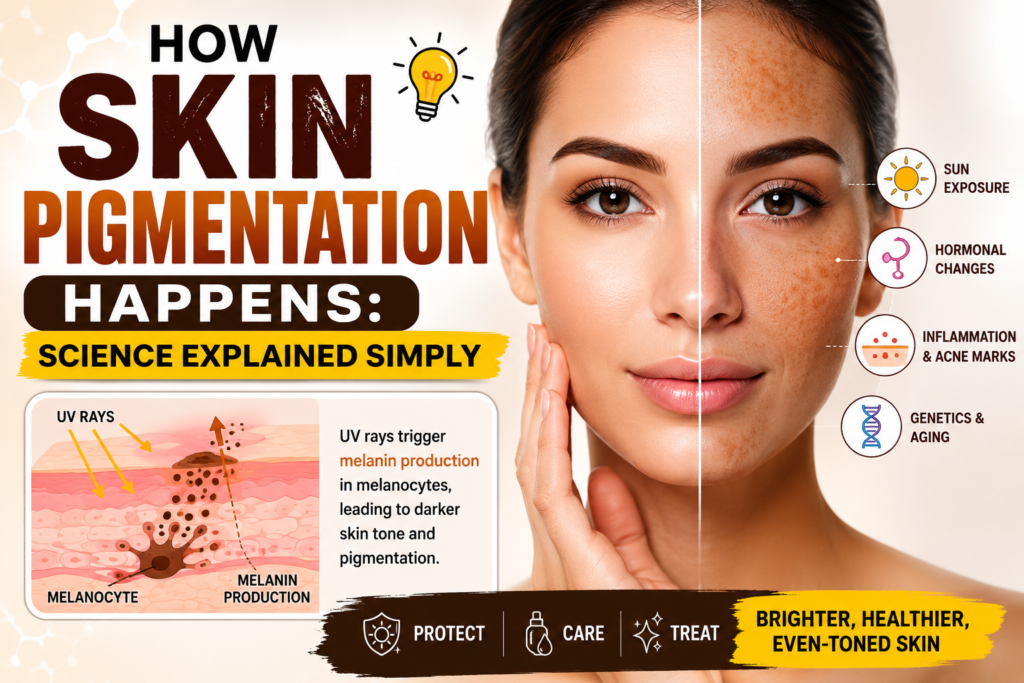
Skin pigmentation refers to the natural coloring of the skin, which is mainly determined by a pigment called melanin. Melanin is produced by special skin cells known as melanocytes, found in the outer layer of the skin (epidermis).
The amount and type of melanin in your skin decide whether your skin tone is light, medium, or dark. Everyone has almost the same number of melanocytes, but the amount of melanin they produce differs from person to person.
Melanin plays the most important role in giving your skin its natural color and protecting it from harmful UV rays.
How Does Melanin Work?
Melanin acts like your skin’s natural sunscreen. When your skin is exposed to sunlight, especially UV rays, your melanocytes produce more melanin to protect the deeper layers of your skin from damage.
This is why your skin becomes darker or develops a tan after spending time in the sun. However, excessive melanin production can lead to skin pigmentation problems like:
- Dark spots
- Melasma
- Post-inflammatory hyperpigmentation (PIH)
- Uneven skin tone
Types of Melanin
There are mainly three types of melanin:
1. Eumelanin
This is the most common type of melanin and gives black and brown color to the skin and hair. Higher eumelanin levels result in darker skin tones.
2. Pheomelanin
This pigment gives yellow, red, or pink tones, commonly seen in people with lighter skin and red hair.
3. Neuromelanin
This type is found in the brain and is not directly related to skin color.
What Causes Skin Pigmentation?
Several internal and external factors can affect melanin production and cause pigmentation disorders.
1. Sun Exposure
The biggest reason for hyperpigmentation is prolonged sun exposure. UV radiation triggers melanocytes to produce extra melanin, causing:
- Sunspots
- Age spots
- Tanning
Using a broad-spectrum sunscreen daily helps prevent sun-induced pigmentation.
2. Hormonal Changes
Hormonal fluctuations during pregnancy, menopause, or while taking birth control pills can lead to melasma, a common pigmentation condition causing brown patches on the face.
Melasma is often triggered by hormones and sun exposure together.
3. Skin Inflammation or Injury
After acne, burns, cuts, or skin irritation, the skin may produce excess melanin during healing, resulting in post-inflammatory hyperpigmentation (PIH).
Post-inflammatory hyperpigmentation is very common after acne breakouts.
4. Genetics
Your genes play a major role in determining your natural skin color and how prone you are to pigmentation issues.
5. Aging
As skin ages, melanocyte function becomes uneven, leading to age spots and patchy skin tone.
6. Medical Conditions and Medications
Certain conditions like Addison’s disease or medications can also trigger unusual skin darkening.
Common Types of Skin Pigmentation Problems
Hyperpigmentation
This happens when too much melanin is produced, causing dark patches or spots.
Examples:
- Melasma
- Sunspots
- Acne marks
Hypopigmentation
This occurs when the skin loses melanin, leading to lighter patches.
Examples:
- Vitiligo
- Skin damage after burns
Depigmentation
Complete loss of pigment in certain areas of the skin.
How to Identify Pigmentation Issues
Signs of skin pigmentation include:
- Dark patches on face
- Uneven skin tone
- Brown or gray spots
- Acne marks that don’t fade
- White patches on skin
If pigmentation persists, consulting a dermatologist is recommended.
How to Prevent Skin Pigmentation
Preventing pigmentation is easier than treating it. Here are some effective tips:
1. Use Sunscreen Daily
Choose SPF 30 or higher to protect against UV damage.
Broad-spectrum sunscreen is essential for pigmentation prevention.
2. Avoid Picking Acne
Picking pimples can worsen inflammation and cause dark marks.
3. Follow a Good Skincare Routine
Use products containing:
- Vitamin C
- Niacinamide
- Retinol
- Kojic Acid
These ingredients help reduce pigmentation and brighten skin tone.
4. Stay Hydrated
Healthy skin heals faster and maintains an even tone.
Treatments for Skin Pigmentation
Depending on the type and severity, treatment options include:
Topical Creams
Doctors may recommend:
- Hydroquinone
- Retinoids
- Azelaic acid
Chemical Peels
Chemical Peel helps remove pigmented skin layers and reveal brighter skin.
Laser Treatment
Laser Pigmentation Treatment targets excess melanin and reduces dark spots effectively.
Microneedling
Stimulates collagen and helps improve post-acne pigmentation.
Always consult a dermatologist before starting any treatment.
Myths About Skin Pigmentation
Myth 1: Only dark skin gets pigmentation
False. People of all skin tones can experience pigmentation.
Myth 2: Pigmentation disappears on its own
Some mild cases fade, but many need treatment.
Myth 3: Home remedies always work
Natural remedies may help mildly, but professional care is often needed for deeper pigmentation.
Final Thoughts
Understanding how skin pigmentation happens helps you take better care of your skin. Melanin is essential for protecting your skin, but when its production becomes uneven, it can lead to hyperpigmentation, dark spots, and uneven skin tone.
The key to healthy, glowing skin is prevention—use sunscreen, follow a proper skincare routine, and seek expert help if needed. With the right care and treatment, most pigmentation issues can be effectively managed.