
When it comes to common skin concerns, blackheads and whiteheads are among the most frequently experienced forms of acne. Although they may look similar at first glance, they are quite different in appearance, causes, and treatment methods. Understanding the difference between blackheads and whiteheads can help you choose the right skincare routine and prevent future breakouts.
In this article, we will explain the causes, symptoms, prevention tips, and effective treatment options for blackheads and whiteheads while using highly searchable skincare keywords for better understanding and SEO value.
What Are Blackheads?
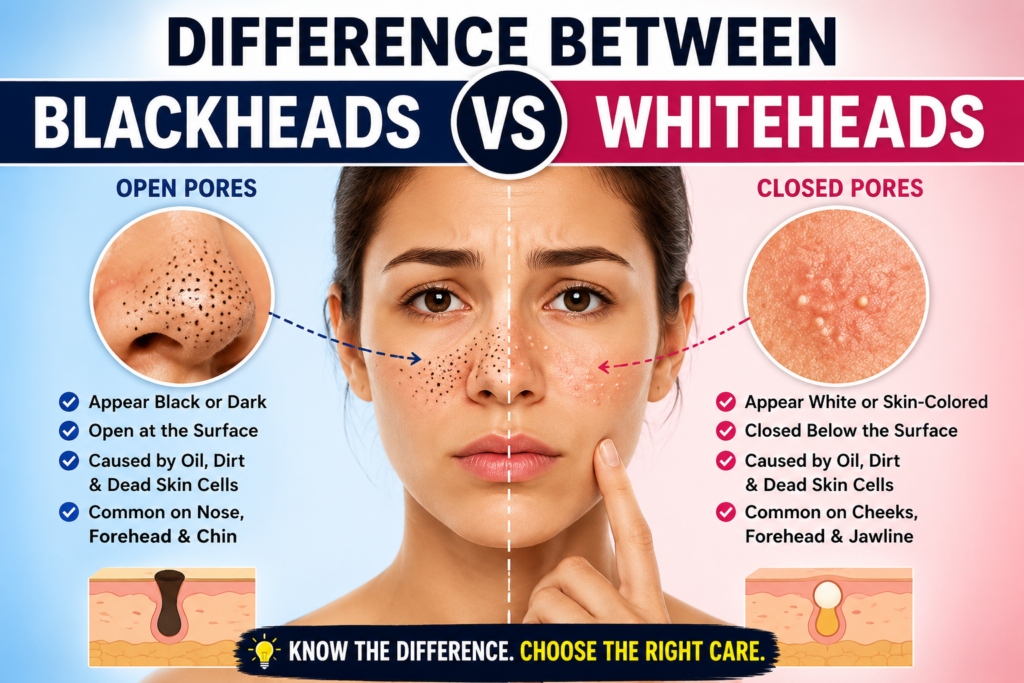
Blackheads are a type of mild acne known as open comedones. They occur when pores become clogged with excess oil (sebum), dead skin cells, dirt, and bacteria. The surface of the clogged pore remains open, and when exposed to air, the material inside oxidizes and turns black.
Common Characteristics of Blackheads
- Small black or dark-colored bumps
- Usually appear on the nose, chin, forehead, and cheeks
- Non-inflammatory acne
- Skin may feel rough or uneven
- Often seen in oily skin types
Causes of Blackheads
Several factors can contribute to blackheads, including:
- Excess oil production
- Hormonal changes
- Poor skincare habits
- Use of heavy or comedogenic cosmetics
- Pollution and dirt buildup
- Improper cleansing
Best Keywords Related to Blackheads
- Blackhead removal
- Blackheads on nose
- How to remove blackheads
- Blackhead treatment
- Best face wash for blackheads
- Open pores and blackheads
What Are Whiteheads?
Whiteheads are also a form of acne, but they are called closed comedones. Unlike blackheads, the clogged pore remains closed beneath the skin surface. This prevents oxidation, so the bump appears white or skin-colored instead of black.
Common Characteristics of Whiteheads
- Small white or flesh-colored bumps
- Usually painless
- Common on forehead, cheeks, chin, and jawline
- May appear in clusters
- Often associated with oily or combination skin
Causes of Whiteheads
The causes of whiteheads are similar to blackheads:
- Excess sebum production
- Dead skin cell accumulation
- Hormonal imbalance
- Stress
- Poor diet
- Use of greasy skincare products
Best Keywords Related to Whiteheads
- Whitehead treatment
- How to remove whiteheads
- Closed comedones treatment
- Whiteheads on face
- Acne-prone skin care
- Best cream for whiteheads
Main Difference Between Blackheads and Whiteheads
Although both blackheads and whiteheads are types of comedonal acne, there are important differences between them.
| Feature | Blackheads | Whiteheads |
|---|---|---|
| Type of Pore | Open pore | Closed pore |
| Color | Black or dark | White or skin-colored |
| Oxidation | Yes | No |
| Appearance | Flat or slightly raised | Raised bumps |
| Acne Type | Open comedone | Closed comedone |
| Common Area | Nose, forehead, chin | Cheeks, forehead, jawline |
The major difference lies in whether the clogged pore is open or closed.
What Causes Blackheads and Whiteheads?
Both conditions develop due to clogged pores. However, multiple internal and external factors can worsen them.
1. Excess Oil Production
Overactive sebaceous glands produce too much oil, increasing the chances of clogged pores.
2. Hormonal Changes
Hormonal fluctuations during puberty, pregnancy, menstruation, or stress can trigger acne formation.
3. Dead Skin Cell Buildup
When dead skin cells are not removed properly, they block pores and lead to comedones.
4. Incorrect Skincare Products
Using oily or pore-clogging cosmetics may worsen blackheads and whiteheads.
5. Poor Diet and Lifestyle
High-sugar foods, stress, lack of sleep, and dehydration can negatively affect skin health.
How to Prevent Blackheads and Whiteheads
Prevention plays a major role in maintaining healthy skin. Following a proper skincare routine can reduce the occurrence of both conditions.
Use a Gentle Cleanser
Wash your face twice daily with a mild cleanser suitable for oily or acne-prone skin.
Exfoliate Regularly
Chemical exfoliants containing salicylic acid or glycolic acid help remove dead skin cells and unclog pores.
Avoid Heavy Makeup
Choose non-comedogenic skincare and makeup products that do not block pores.
Keep Your Skin Hydrated
Use lightweight, oil-free moisturizers to maintain skin balance.
Avoid Touching Your Face
Frequent touching transfers dirt and bacteria to the skin.
Use Sunscreen Daily
A non-greasy sunscreen protects the skin without causing pore blockage.
Best Treatments for Blackheads
Salicylic Acid
Salicylic acid penetrates deep into pores and removes excess oil and debris.
Retinoids
Topical retinoids help prevent clogged pores and improve skin texture.
Clay Masks
Clay masks absorb excess oil and help reduce blackheads.
Professional Extraction
Dermatologists may safely remove stubborn blackheads using specialized tools.
Chemical Peels
Chemical peels exfoliate the skin and improve clogged pores.
Best Treatments for Whiteheads
Benzoyl Peroxide
Helps reduce acne-causing bacteria and inflammation.
Retinol Creams
Retinol promotes skin cell turnover and prevents closed pores.
Gentle Exfoliation
Mild exfoliation prevents buildup of dead skin cells.
Acne Treatment Gels
Products containing niacinamide or adapalene may help reduce whiteheads.
Dermatologist Consultation
Persistent whiteheads may require prescription treatment.
Home Remedies for Blackheads and Whiteheads
Some natural remedies may support healthy skin when used carefully.
Steam Therapy
Facial steaming helps loosen clogged pores.
Honey and Lemon
Honey has antibacterial properties, while lemon may help reduce oiliness.
Aloe Vera Gel
Aloe vera soothes irritated skin and supports healing.
Green Tea
Green tea contains antioxidants that may help reduce excess sebum.
Always perform a patch test before trying home remedies.
Mistakes to Avoid
Over-Scrubbing the Skin
Harsh scrubs can irritate the skin and worsen acne.
Squeezing Pimples
Picking or squeezing may lead to infection, scarring, and pigmentation.
Skipping Moisturizer
Even oily skin needs hydration.
Using Too Many Products
Excessive skincare products can damage the skin barrier.
When to See a Dermatologist
You should consult a dermatologist if:
- Acne becomes painful or severe
- Over-the-counter products do not work
- You develop acne scars
- Breakouts frequently return
- Skin irritation becomes severe
Professional treatment can help control acne effectively and improve overall skin health.
Conclusion
Blackheads and whiteheads are common types of acne caused by clogged pores, excess oil, and dead skin cells. The main difference is that blackheads have open pores exposed to air, while whiteheads remain closed beneath the skin surface. Proper skincare, regular cleansing, exfoliation, and non-comedogenic products can help prevent both conditions.
By understanding the difference between blackheads and whiteheads, you can choose the right treatment and maintain clearer, healthier skin. Following a dermatologist-recommended skincare routine can significantly improve acne-prone skin and reduce future breakouts.